Published on
Last modified
Too much data clutter? How to reduce cloud costs & CO2
Unstructured data drives up costs, CO₂, and risks. Learn how data hygiene helps companies use cloud storage more efficiently, in compliance with the GDPR, and more sustainably.
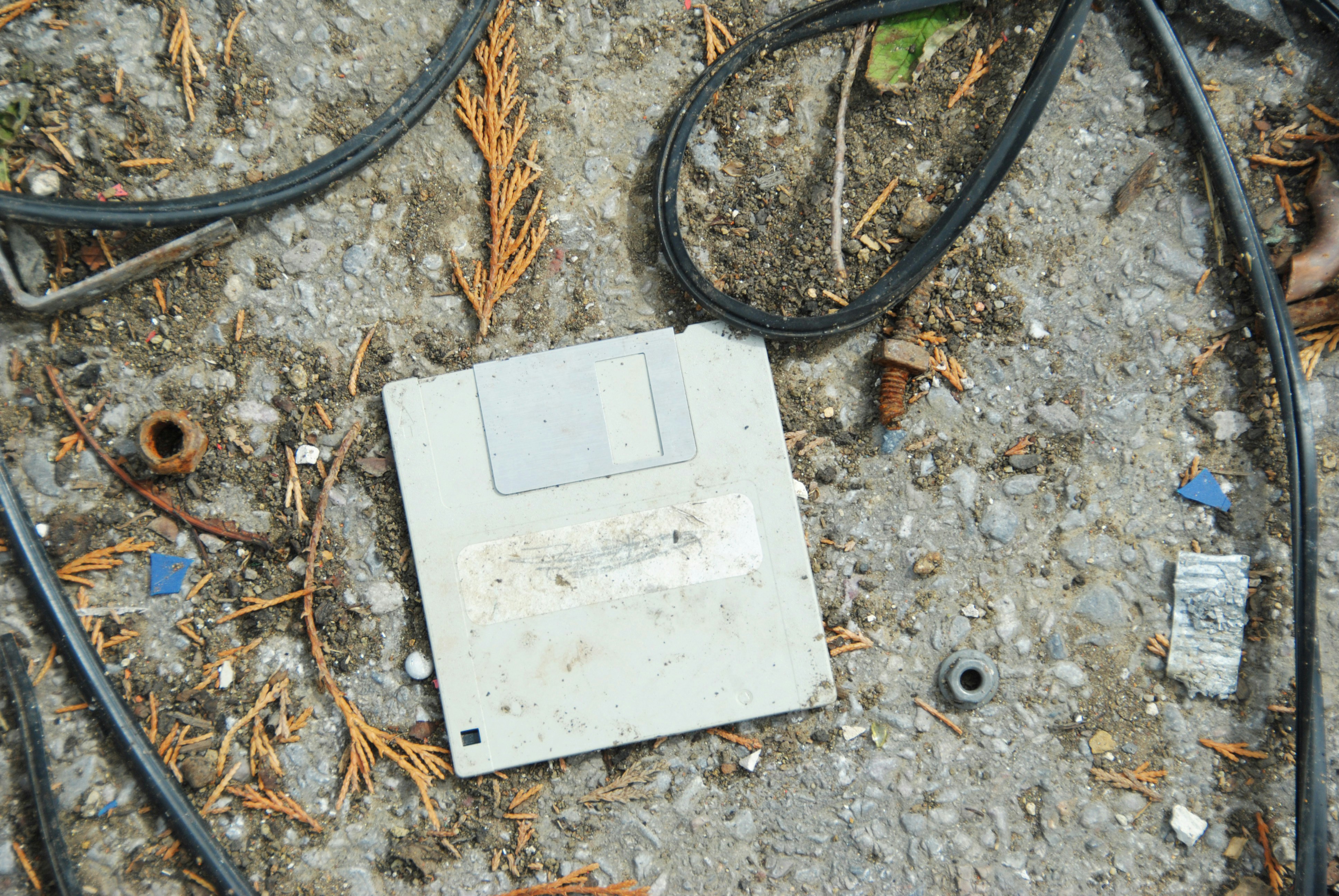
How unused data consumes storage, money, and CO₂ — and why “data hygiene” is becoming a strategic necessity.

The Data Explosion and Its Hidden Costs
Cloud infrastructures make it possible to store vast amounts of data – but a major challenge is that 80% to 90% of all company data is unstructured, and a large share of the data remains unused – so-called Dark Data (Source: Indico Data). In concrete terms, companies often use less than 1% of their unstructured data (Source: Harvard Business Review, 2017). At the same time, this drives costs, emissions, and compliance risks – without any discernible added value.
Food for thought: How much budget, CO₂, and risk are lying unnoticed in your data silos?
Data growth meets sustainability: market situation and challenge
Global data volume is growing rapidly: From about 33 zettabytes (2018) to an expected 175 zettabytes by 2025 (Source: IDC). At the same time, enormous data growth significantly increases the energy demand of data centers. Data centers will consume around 415 TWh of electricity in 2025 – about 1.5% of global consumption. By 2030, this share could double to 3%. Electricity demand is growing by 15% annually – four times faster than in other sectors. Another burden is the concentration of infrastructure in just a few locations. (Source: Heise)
Much storage space remains unused – generating invisible costs and emissions.
The hidden costs of Dark Data
Dark Data causes tangible cost and governance problems:
Financial burden: Companies continuously pay for data that has no operational value.
Governance and process risks: Without clear data ownership, classification, access control, and automatic deletion periods are missing – this increases risks in audits or data breaches.
Compliance & GDPR: Data whose existence or content is unclear can hardly be managed in a GDPR-compliant way – for example, in response to access or deletion requests.
Data hygiene: The strategic key to greater efficiency
Data hygiene means actively managing the data inventory. This includes, among other things:
Categorization and classification: What is active, critical, redundant, or outdated?
Retention policies: Automated rules for deletion, archiving, versioning.
AI-powered tools: Modern AI solutions help companies analyze and manage their data inventories more intelligently. They automatically recognize patterns, uncover redundant or outdated data, and identify duplicates as well as unused “Dark Data.” With the help of AI – such as in the Yorizon AI – unstructured data from a wide range of sources can be transformed into company-specific knowledge. This automatically creates knowledge bases that are available to employees via a secure, private chatbot.
Storage tiering: Through intelligent storage tiering, companies can reduce their storage and backup costs by more than 70%. Frequently used (“hot”) data remains available on fast storage, while rarely used (“cold”) data is automatically moved to cheaper and more energy-efficient storage classes – whether on-premises or in the cloud. For maximum savings, the use of file-based tiering is crucial, as it moves complete file information including metadata and thus avoids expensive data transfers. (Source: Komprise, 2024)
For MSPs and system integrators, there is enormous potential here: Those who support customers with data audits, storage governance, and sustainable storage concepts clearly stand out in the market.
Modern cloud infrastructure: sustainability through innovation
Data centers are becoming more energy-efficient – as shown by PUE (Power Usage Effectiveness) values of around 1.1, which are now possible in modern cloud infrastructures. For comparison: the global average is around 1.55. Through innovative cooling technologies, intelligent load balancing, and the use of renewable energy, leading providers can continuously improve their efficiency.
But with the boom in cloud services, AI, and streaming, the ecological footprint of digital infrastructure is also growing. Particularly problematic: the energy mix in many regions still relies on fossil fuels – and the water consumption for cooling and power generation is rarely disclosed.
The result is the so-called Green Cloud Paradox: Even if the technology becomes more efficient, rising data volumes lead to higher overall environmental impact. What will therefore matter is how transparently providers report their CO₂ emissions, electricity and water consumption, and regional infrastructure – and how they help customers make sustainable decisions.
This means: providers that combine efficiency, data clarity, and CO₂ transparency will be preferred.
More on the Green Cloud Paradox and electricity consumption of data centers
Strategic recommendations for companies and system integrators
For IT teams
Conduct regular data hygiene audits: Which data is being used, which is not?
Introduce automated classification tools
Integrate Retention & Lifecycle Policies into all systems – for GDPR compliance and cost reduction.
For MSPs & system integrators
Offer Data Hygiene as a Service: analysis + technical implementation.
Combine ESG data & storage governance – e.g. as part of Green IT assessments.
Integrate white-label functions for customer portals: “data clarity at the touch of a button”.
For executive leadership
Link sustainability and IT strategy: Green IT starts with the data strategy.
Communicate storage and data policies as a lever within ESG reporting.
Actively question cloud budgets: What is storage growth – what is data waste?
Conclusion: data strategy is sustainability strategy
Unstructured data causes ongoing costs, increases risks – and wastes resources. But with targeted data hygiene, companies can bridge the gap: increase efficiency, ensure compliance, and reduce CO₂.
System integrators and MSPs that actively support this path position themselves as modern, responsible partners – and simultaneously benefit from a growing consulting market.
Three key takeaways
Up to 90% of stored company data is never used.
Automated classification & storage tiering save energy and storage space.
Green IT starts with the data strategy – and offers real differentiation potential.
Would you like to make your data strategy future-proof and ESG-compliant? Yorizon supports system integrators and enterprise customers in building sustainable cloud architectures – with tools, consulting, and CO₂-transparent infrastructure.